Solitaire
- 4.7
- Rating
- 1.00M
- Installs
- Free
- Price
 Analysis by App-foxy
I keep coming back to simple card games when I want a short break without learning a new system, competing with strangers, or committing to a long session. Solitaire fits that mood well. It is a free card game from LinkDesks Classic Puzzle Games, built around the familiar solo format most people already know, with an emphasis on quiet, uncomplicated play. After spending time with it, I see it as a practical choice for anyone who wants a straightforward game to open during a commute, a coffee break, or a few minutes before bed.
What makes this particular version appealing is not that it tries to reinvent solitaire. Instead, it stays close to the reason people still play the genre: the rules are easy to remember, each hand gives me a small problem to solve, and I can stop whenever I want. The game has reached over a million installs and holds a 4.7 average from roughly twenty-five thousand ratings, which matches my impression that it is aimed at a broad audience rather than a niche group of card-game experts.
A familiar solitaire experience with a clear, current identity
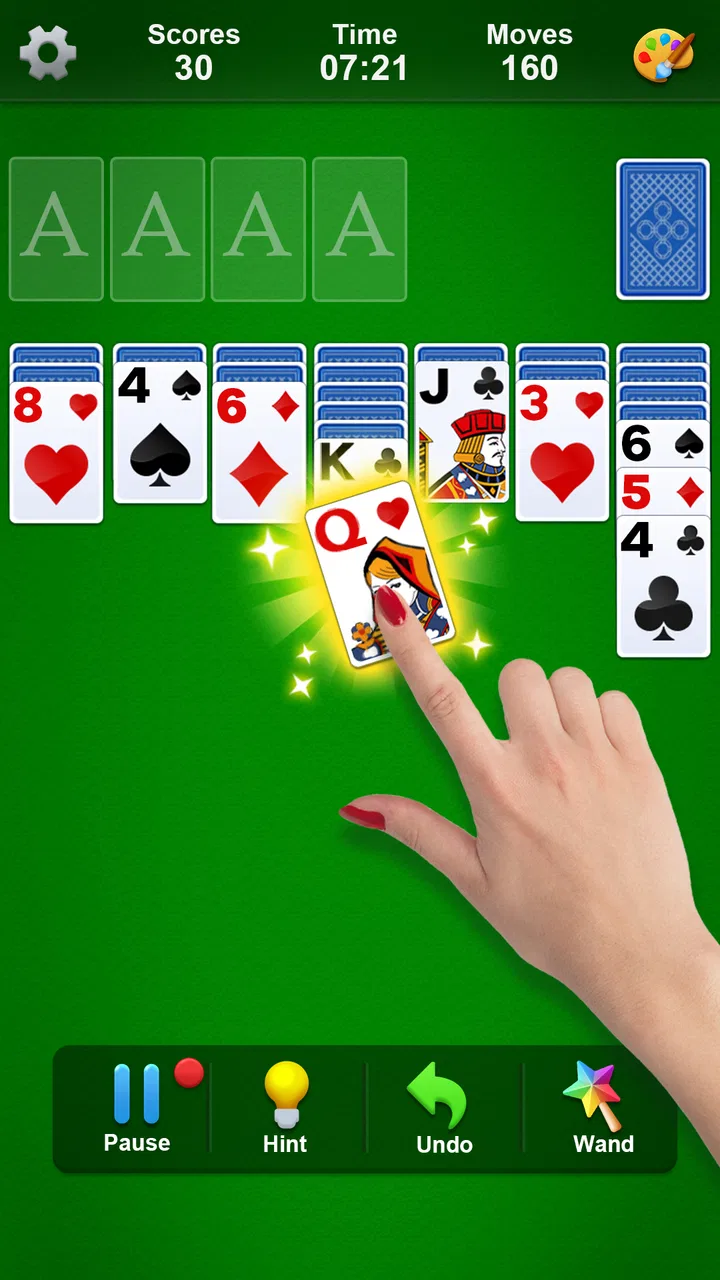
The first thing I noticed is how quickly I could begin. There is no need to understand a campaign, create a character, or study a complicated tutorial. The central activity is arranging cards, uncovering hidden ones, and building the familiar sequences that make a successful hand satisfying. That accessibility is important because solitaire works best when the game gets out of the way and lets the player focus on the next sensible move.
You May Also Like

 Blood Strike: 2.5 Anniversary
Blood Strike’s Loadouts Turn Every Drop Into a Tactical Gamble
A close look at Blood Strike’s custom loadouts: how fast access to signature weapons reshapes its battle royale rhythm, rewards preparation, and narrows the gap between fights.

 Pandora - Music & Podcasts
Pandora’s Music Is Easy to Start, but Harder to Recover
Pandora’s strength is its low-effort path from a seed to a station. Its weak spot is how much confidence it asks you to place in connection, setup, and quiet recovery.

 8 Ball Pool
 Is Built on Rivalries, Rematches, and Routine
A close look at the rivalries, rematches, shared routines, and unanswered safety questions that turn a quick pool match into a persistent mobile community.

 Samsung Music
’s Quiet Strength Is Playing What You Already Own
Its reach comes less from spectacle than from dependable access to a personal library. That simplicity is both the app’s strongest retention engine and its ceiling.

 AccuWeather: Weather Radar
AccuWeather Review: A Quick, Clear Forecast for Everyday Decisions
For everyday plans, the best forecast is the one you can understand quickly. AccuWeather makes rain timing, radar, and local conditions easy to act on, with a few trade-offs.

 Hill Climb Racing
Why Hill Climb Racing Still Turns Crashes Into One More Run
A tiny car, a bumpy hill and one more upgrade: Hill Climb Racing keeps resurfacing because its simple chaos makes every near-miss feel personal.
More From Our News Desk



I would describe the presentation as intentionally relaxed. The store summary emphasizes offline, easy, and calming play, and those qualities are central to how I use it. This is not the kind of card game I open when I want dramatic effects or a competitive ladder. I open it when I want something mentally active but emotionally low-pressure. Even a losing hand feels more like a small puzzle to reconsider than a punishment.
The game belongs firmly in the classic card game space, so its main strength depends on whether you already enjoy that style. If you like sorting, planning several moves ahead, and gradually revealing the board, the basic loop remains effective. If you need constant novelty, action, or social interaction, the simplicity may feel limited after the initial appeal fades.
One useful habit is to treat each hand as a short decision exercise rather than rushing to move every available card. I found that pausing before exposing a hidden card can make a difference. Sometimes the most attractive move is not the most useful one, especially when moving a visible card would block a sequence or reduce the number of future choices. That small change in approach gives the game more depth than its gentle presentation suggests.
Why the offline focus matters in ordinary use
The offline positioning is especially useful for situations where I do not want to depend on a connection. A realistic example is waiting in a clinic or sitting on a train with unreliable reception. I can use the game as a contained break instead of opening a social feed and losing track of time. It also suits travel, airplane mode, or a quiet evening when I want entertainment that does not demand messages, matchmaking, or a live audience.
Offline play also changes the way I think about the game. I am less tempted to treat every session as part of a larger online routine. There is no pressure to check rankings or respond to other players. That makes it easier to play for a few minutes and put the phone down. For people who want a small mental reset rather than another service competing for attention, this is a meaningful advantage.
There is a trade-off, though. A connection-free solitaire game is naturally less compelling for someone who wants shared achievements, direct challenges, or a changing community. Traditional alternatives with online leaderboards or multiplayer tables may be better for players who need a sense of competition. Solitaire is most convincing when judged as a personal puzzle, not as a social card platform.
How the current version feels in practice
The current version is 1.38.0, and that gives the app a more established feel than a newly released experiment. The game was released on September 14, 2023, so it has had time to settle into its role as a polished, accessible solitaire option. I would not read the version number as a promise of a particular feature set, but it does tell me that the app is being presented as an ongoing product rather than a one-off download.
For an existing player, the most important effect of that maturity is consistency. Solitaire is a game where small interruptions can be more annoying than a lack of features. If the layout, card movement, or general rhythm feels familiar from one session to the next, I can concentrate on the puzzle instead of relearning the interface. That stability is more valuable here than flashy additions would be.
At the same time, a mature version can create expectations. Players may reasonably hope for continued attention to usability, accessibility, and smooth performance on older devices. The minimum operating system is Android 6.0, which keeps the game available to a wide range of Android users. That broad compatibility is helpful, although people using very old hardware should still judge the experience by how comfortably their own device handles current apps.
I also appreciate that the game is rated for Everyone. That makes it easier to recommend within a household, including to younger players or older relatives who want a familiar pastime. The age rating does not turn the game into an educational tool, but the clear rules and calm pace make it approachable for people who do not usually play mobile games.
Small decisions that make a difference
My best practical tip is to avoid treating the first available move as automatically correct. In a typical solitaire hand, uncovering a hidden card is often valuable, but moving a card simply because it can move may remove flexibility. I try to compare three things before acting: whether the move reveals information, whether it opens a useful empty space, and whether it preserves a longer sequence for later.
A second useful approach is to use short sessions deliberately. Instead of opening the game with the vague intention of playing until I am bored, I use it as a five-minute reset between tasks. That works particularly well because the game does not require a long narrative or a saved competitive state to make a session worthwhile. One hand can be enough to clear my head without taking over the rest of the break.
A third insight is that this is a good game for rebuilding patience, but not necessarily for maximizing speed. If I focus only on finishing quickly, I start making automatic moves and miss better arrangements. The more satisfying way to play is to look for the move that improves the whole layout, even if it does not immediately place a card in its final pile. That makes the familiar rules feel more strategic without pretending the game is a deep strategy title.
Players who are new to solitaire should also know that a failed hand is not always evidence of poor play. The starting arrangement can leave fewer useful options, and part of the appeal is working with the situation in front of me. I recommend learning the basic flow first and worrying about efficiency later. The game is more relaxing when I see it as a sequence of choices rather than a test I must pass every time.
Where it compares well with other card games
Compared with a physical deck, this version is more convenient because the cards are always ready, the layout can be reset without shuffling, and I do not need a table. That makes it better for small spaces and spontaneous sessions. A physical deck still wins when I want a screen-free activity or a tactile experience, so I would not treat the app as a replacement for cards in every situation.
Compared with larger solitaire collections, its appeal is likely to be focus. Many card apps present numerous variants, daily challenges, themes, statistics, and reward systems. Those extras can be enjoyable, but they can also make a simple game feel busy. Solitaire is a better fit for someone who wants the classic activity without turning every hand into a checklist.
Compared with multiplayer card games, it is calmer and more private. I do not have to wait for another person, match someone with a similar skill level, or worry about losing because of an opponent’s unusual strategy. The downside is obvious: there is no human unpredictability. If the best part of card gaming for you is reading another player, bluffing, or reacting under pressure, this is the wrong category of experience.
It also differs from puzzle games that depend on constant new levels. Solitaire can repeat its basic structure indefinitely, which is both its strength and its limitation. I can return after a week and immediately understand what to do, but I should not expect the same kind of handcrafted progression found in a level-based puzzle game. The right choice depends on whether I value repeatable comfort or a steady stream of new mechanics.
Costs, expectations, and the audience it suits
The game is free to download, which makes trying it low-risk. There are in-app purchases ranging from $0.99 to $39.99 per item, so I would advise checking the purchase flow carefully if the phone is shared with children or if you prefer a completely no-cost experience. The presence of optional purchases does not change the basic appeal of the card game, but it is worth keeping in mind before settling into a long-term routine.
For me, the free entry point is most valuable because solitaire is a personal preference. Some people will immediately enjoy the rhythm, while others will find the repetition dull. Being able to test the game without paying upfront makes that decision easier. I would still avoid buying anything until I had played enough to know whether the basic loop genuinely fits my habits.
The best audience includes casual players, fans of traditional card games, people who want an offline pastime, and anyone looking for a gentle way to occupy a few spare minutes. It can also work well for older users who prefer familiar rules over fast reactions. The Everyone rating supports that broad appeal, while the Android 6.0 minimum keeps it relevant to users who are not carrying the newest phone.
I would skip it if I wanted a strong social layer, a story, frequent content drops, or a demanding competitive system. I would also look elsewhere if I dislike repeating the same core format. No amount of clean presentation can change the fact that this remains solitaire. Its value comes from doing that one thing comfortably, not from offering a completely different game every time I open it.
What existing users should watch as the app evolves
Because the current version is 1.38.0, I would watch future changes through the lens of refinement rather than expecting a total transformation. The most useful improvements for this kind of app would be the ones that reduce friction: clearer controls, dependable card placement, comfortable readability, and sensible behavior on different screen sizes. Those details determine whether a relaxing hand stays relaxing.
I would also pay attention to how the developer balances simplicity with optional extras. New features can help regular players, but too many prompts, rewards, or distractions could weaken the quiet quality that makes the game attractive. For existing users, the ideal evolution would preserve quick offline access while making the experience more flexible for different play styles.
Another thing worth watching is the relationship between the free experience and in-app purchases. A free solitaire game needs to feel complete enough for occasional players, while optional spending should remain understandable for people who choose it. I would judge future updates not only by what they add, but by whether they keep the core hand easy to start and easy to leave.
None of this means the game needs dramatic change. In this category, restraint can be a sign of good judgment. A useful update might be invisible during a normal hand because it simply makes the app more stable or comfortable. That kind of progress matters more to me than a novelty feature that I use once and then ignore.
My final take after using it
Solitaire succeeds because it understands the value of a familiar activity. I can open it without preparation, play offline, and leave after a short session without feeling that I abandoned a larger obligation. The game from LinkDesks Classic Puzzle Games is free, rated for Everyone, and supported by a large enough audience to show that this simple format still has broad appeal.
Its limitations are equally clear. It does not offer the social tension of multiplayer cards, the variety of a large game collection, or the novelty of a constantly changing puzzle system. The in-app purchase range also means I would keep an eye on spending, especially on a shared device. Those points do not make it a poor choice; they simply define who will enjoy it most.
I recommend it to anyone who wants a dependable, low-pressure solitaire break rather than a feature-heavy gaming platform. If that sounds like your kind of phone game, this is an easy one to try. If you need competition, discovery, or a strong sense of progression, a different card app will probably hold your attention longer. For quiet moments, however, Solitaire gets the important things right: familiar rules, accessible play, and a format that fits naturally into everyday life.
FAQs for Solitaire
01Is Solitaire free to download and play?
Yes, Solitaire is free to download and play on both Android and iOS devices. However, the app may offer in-app purchases or ads to enhance the gaming experience. These can include additional features, themes, or ad-free play. Be sure to check the app's description for details on any additional costs.
02Can I play Solitaire offline?
Absolutely! Solitaire can be played offline, allowing you to enjoy the game without needing an internet connection. This makes it a great option for traveling or when you're in areas with limited connectivity. Just download the app, and you can play anytime, anywhere.
03What features does Solitaire offer?
Solitaire typically includes various features such as customizable card backs, themes, and daily challenges. Some versions also offer hints, undo options, and an auto-complete feature to finish games quickly. Check the app's description to see the specific features available in the version you're interested in.
04Is Solitaire suitable for all ages?
Yes, Solitaire is a classic card game that is suitable for all ages. It's easy to learn, making it accessible for children, yet challenging enough to keep adults engaged. The app is designed with a user-friendly interface, ensuring a smooth experience for players of any age group.
05Does Solitaire have a multiplayer mode?
Most Solitaire apps focus on single-player gameplay. However, some versions may include competitive features, such as leaderboards or timed challenges, allowing you to compete with friends or players worldwide. If multiplayer interaction is important to you, check the app details for any such features before downloading.
Pros
- Simple and intuitive interface.
- Quick and responsive gameplay.
- No internet required.
- Customizable card designs.
- Daily challenges available.
Cons
- Ads can be intrusive.
- Limited tutorial for beginners.
- Battery can drain quickly.
- Occasional app crashes.
- No multiplayer mode.

Solitaire
Gallery